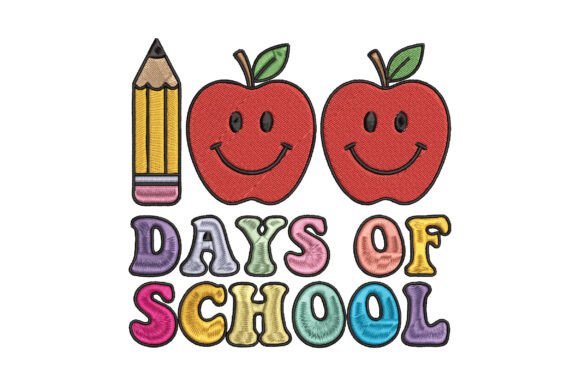
100 Days of School Embroidery Design Review
As an experienced embroidery designer who spends countless weekends prepping for local craft fairs and managing a busy handmade shop, I know that the difference between a design that sits in a drawer and one that flies off the booth table often comes down to practical application. Today, I am reviewing the 100 Days of School Embroidery Design, specifically looking at how it performs when turned into tangible products for the "Back To School" season. This review is written from the perspective of someone standing at their sewing machine, planning a display for tote bags, aprons, and market bags.
The product description paints a vivid picture: a cheerful pencil, smiling apples, and colorful stitched lettering. From a design asset standpoint, this immediately signals a playful and festive mood. It does not feel like a rigid, corporate school logo or a minimalist farmhouse aesthetic. Instead, 100 Days of School Embroidery Design leans heavily into the cute and fun side of things. For a craft fair seller, this is a crucial distinction. The visual appeal here is high-energy and celebratory, which suggests it will perform best on items intended as gifts or party favors rather than serious professional attire.
First Impressions and Visual Impact
When you first look at the digital preview of 100 Days of School Embroidery Design, the priority is clarity. Does the imagery translate well? A design featuring a pencil and apples is classic, but the execution matters. If the stitching is too dense, the "smiling" faces might get lost in a sea of thread. However, if the design utilizes open areas and varied stitch types effectively, it will pop against the fabric. For a handmade product to sell, it needs to be noticed from three feet away. The colorful lettering mentioned in the description is likely the anchor point; if that text is legible at a small scale, the design has strong potential for smaller items like patches or pouches.
This design feels perfect for creating a cohesive booth display. Imagine a row of white canvas tote bags, each embroidered with a variation of the 100-day theme. The cheerful nature of the design invites customers to touch the fabric, knowing that the tactile quality of the stitches adds value to the finished product. It screams "handmade quality," which is exactly what buyers at a craft fair are hunting for.
Product Applications: Where It Shines
Not every embroidery file works on every item. Based on the playful nature of the pencil and apple motif, I have identified several high-performing categories where 100 Days of School Embroidery Design would excel:
- Tote Bags and Market Bags: This is the crown jewel for this design. A large, bold placement on a sturdy canvas tote allows the colorful lettering and the pencil graphic to breathe. Parents love these for carrying lunchboxes or gym clothes, making them a high-demand craft fair product.
- Apron Embroidery: A child's apron or a teacher's utility apron is another fantastic venue. The design fits perfectly on the bib area, turning a functional kitchen tool into a commemorative keepsake.
- Tea Towel Embroidery: For a softer, more homey vibe, placing the design on a linen tea towel creates a lovely gift set. The texture of the towel complements the softness of the embroidery.
- Embroidered Patches: If the design elements are clean enough, they can be digitized into a patch shape. These are excellent for upselling—attaching a small version of the design to a cap or a backpack strap.
- Fabric Pouches and Pillow Covers: Small zippered pouches for pencils or coin purses work well if the design is scaled appropriately. Similarly, a pillow cover featuring the smiling apples adds a decorative touch to a classroom or nursery.
For Etsy sellers and boutique makers, having a variety of mockups showing this design on different products is essential. A printable mockup that shows the design on a tote bag alongside a matching apron can significantly boost conversion rates by helping the customer visualize the complete look.
Production Practicality and Sales Strategy
From a production standpoint, ease of use is king. If 100 Days of School Embroidery Design is too complex, your turnaround time suffers, and your profit margins shrink. You need to evaluate whether the design works as a small accent or if it requires a large hoop size to capture all the details. Ideally, a design like this should be versatile enough to be reduced slightly for a pocket placement on a shirt while still retaining its character.
Photography is also a major factor. When setting up your booth or listing items online, the colors of the thread must contrast sharply with the fabric. If you are using dark fabric, the "colorful stitched lettering" needs to be bright enough to stand out. Conversely, on light fabrics, ensure the thread density is sufficient so the image doesn't look washed out. Batch production is key for craft fairs; if the design stabilizes quickly and runs smoothly through the machine without frequent re-threading, you can produce a steady stream of inventory.
Careful-Use Notes and Potential Pitfalls
Even the most adorable designs can fail if technical details are ignored. Here are specific warnings to keep in mind before you start producing:
- Dense Stitch Areas: Check the center of the apples and the eraser of the pencil. If the stitch density is too high, the fabric may pucker, especially on thin materials like t-shirts or lightweight towels.
- Small Lettering: Readability is critical. If the "100 Days" text is too small, it will look like a blur from a distance. Ensure the font weight is thick enough to hold its shape.
- Curved Cap Surfaces: While caps are popular, curved surfaces can distort circular elements like the apples. Test this design on a cap sample first to see if the smile lines remain visible.
- Dark Fabric Challenges: On dark backgrounds, you may need a heavier underlay or a specific color strategy to prevent the background fabric from showing through the lighter threads.
- Fabric Texture: Highly textured fabrics, like heavy bouclé or rough burlap, can hide fine details. Stick to smoother weaves like cotton twill or linen for the best results.
Designer's Checklist for Success
Before you commit to mass production for your next weekend market, follow this professional checklist to ensure your 100 Days of School Embroidery Design delivers the best return on investment:
- Test on Scrap Fabric: Never run a full production batch without testing on scrap material first. Watch for puckering and check the tension.
- Check Thread Contrast: Lay the thread spools over the fabric to ensure the colors pop. Sometimes a digital preview looks different than the physical thread.
- Confirm Hoop Size: Verify the required hoop size matches your machine's capabilities. A design that requires a 6x10 hoop might limit you to larger items only.
- Inspect Stitch Density: Look closely at the digitization. High-density areas can cause needle deflection, leading to misaligned stitches.
- Use the Right Stabilizer: Match your stabilizer to the fabric weight. A tear-away might be necessary for woven cotton, while a cut-away could be needed for stretchy knits.
- Create Real Mockups: Don't rely solely on digital renderings. Create at least one real mockup to photograph for your Etsy listings and social media.
- Compare Fabric Colors: White isn't the only option. Test the design on navy, sage green, or mustard yellow to see which sells better in your specific market.
- Verify Commercial Licensing: Before selling finished products, confirm the commercial license terms of the digital embroidery file. Some licenses restrict the number of units you can sell.
In conclusion, 100 Days of School Embroidery Design holds significant promise for craft fair sellers and digital entrepreneurs. Its cheerful pencil and apple motif aligns perfectly with the emotional buying triggers of parents and teachers during the autumn season. By paying attention to stitch density, fabric choice, and proper stabilization, you can transform this digital file into a standout collection of handmade goods. Whether you are selling embroidered patches, custom aprons, or unique tote bags, this design offers a solid foundation for building a loyal customer base and boosting your booth sales.