Teach Applique Back to School Review
When I first opened the file for Teach Applique Back to School, my immediate reaction wasn't about stitch counts or digitizing metrics. It was about the feeling it evokes. There is a specific energy that comes with the start of a new school year, and this design captures that spirit perfectly without feeling cluttered or overly commercial. As someone who has spent years evaluating digital assets for both personal crafting and client work, I look for designs that tell a story at a glance. This piece does exactly that.
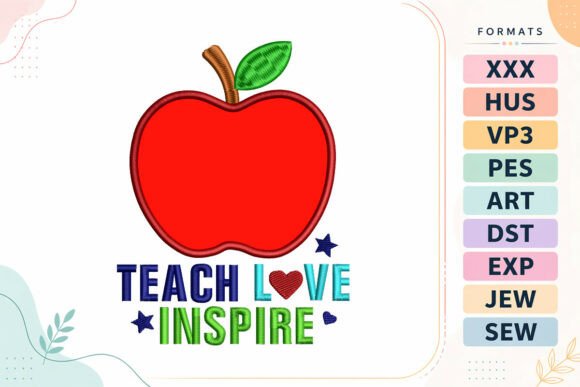
The core concept revolves around the classic imagery of an apple paired with the phrase "Teach Love Inspire." The layout feels balanced, offering a large focal point in the apple applique section while leaving just enough room for the inspirational lettering to breathe. For designers looking to create something that resonates with educators, parents, and students alike, this is a strong candidate. It strikes a chord that goes beyond simple decoration; it speaks to the profession itself.
Real-World Application: From Screen to Stitch
Let's talk about how this design performs when it leaves the computer screen and hits the hoop. I recently tested a similar workflow by preparing a custom embroidered tote bag for a local teacher appreciation event. While I didn't use this exact file for that project, the principles of applying Teach Applique Back to School are identical. The applique nature of the design is its strongest asset here. Unlike standard fill stitches which can sometimes feel heavy on lightweight fabrics, an applique approach adds texture and dimension that elevates the finished product.
Imagine taking this design and placing it on a high-quality canvas tote. The contrast between the fabric of the apple and the background fabric creates a tactile element that customers love to touch. It transforms a standard promotional item into a boutique-quality accessory. Similarly, if you were to apply this to a sweatshirt for a back-to-school gift, the applique technique prevents the embroidery from feeling like a flat sticker. It looks integrated into the garment, which is crucial for maintaining a professional appearance.
For Etsy sellers and small business owners, this design offers versatility. It works beautifully as a standalone motif on baby onesies, where the soft curves of the apple suit the delicate aesthetic of infant wear. However, the key to success lies in execution. The lettering needs to be crisp, and the applique edges must be clean. If the satin stitch around the apple is too dense, it might pucker on thinner materials. If it is too loose, the edges might fray after a few washes. This design requires attention to thread color contrast and stabilizer choice to truly shine.
Navigating Fabric Challenges
No design exists in a vacuum, and Teach Applique Back to School is no exception. There are scenarios where this design demands caution. If you are working with stretchy fabrics like jersey knits for t-shirts, the stability of the applique becomes critical. Without proper tear-away or cut-away stabilizer, the weight of the applique pieces could cause the fabric to distort over time. The same applies to curved surfaces like caps. While the design is visually appealing, the curvature of a hat can make aligning the lettering challenging if the digitization isn't optimized for the curve.
Dark fabrics present another consideration. If the base fabric is black or navy, the colors chosen for the apple and the lettering need to pop. A light-colored apple on a dark background will look striking, but the stitching density must be sufficient to cover the underlying fabric completely. Conversely, using this design on very thin fabrics like sheer cotton or silk might be risky unless the stabilizer is carefully selected. The weight of the applique layers could overwhelm delicate materials, leading to a lopsided finish.
Visual Appeal and Customer Perception
In the world of handmade products and commercial embroidery, visual appeal directly correlates to perceived value. When a customer receives a personalized gift or purchases a boutique item, they are often judging the quality based on the clarity of the design. Teach Applique Back to School has the potential to significantly boost this perception. The combination of a recognizable symbol (the apple) with an emotional message (Teach Love Inspire) creates a narrative that buyers connect with immediately.
This design is particularly effective for creating a cohesive brand identity. Imagine a shop owner selling teacher supplies, classroom decor, or educational gifts. Using this specific motif across various products—pillow covers, kitchen towels, aprons, and patches—creates a unified visual language. It signals to the buyer that the brand understands the niche and cares about the details. In a crowded marketplace like Etsy, that level of consistency helps build trust and encourages repeat business.
Furthermore, the design's simplicity makes it highly adaptable for mockups. Whether you are creating printable previews for your online store or showing clients what their custom apparel might look like, the clear shapes and distinct colors translate well to digital images. It allows potential buyers to visualize the final product easily, reducing hesitation and increasing conversion rates.
Practical Notes for the Designer
Before committing this design to a full production run or a major client order, there are essential steps every experienced embroiderer should take. First and foremost, always test the design on scrap fabric. This is non-negotiable. You need to see how the stitch density behaves on your specific machine and how the thread tension holds up against the fabric type you intend to use.
Check the thread color contrast carefully. The beauty of an applique design relies heavily on the difference between the fabric pieces and the stitching. If the thread color blends too much with the fabric, the definition is lost. Review the stitch density in the software before sending it to the machine. High-density areas can lead to needle deflection or puckering, especially in smaller hoops. Ensure your hoop size matches the design dimensions to avoid unnecessary trimming or distortion.
Inspect the small details, particularly the corners of the lettering and the edges of the apple. These areas are prone to issues if the digitization is not precise. Test the design in black and white mockups to ensure the composition holds up even if color printing is not available or if the customer prefers monochromatic options. Also, consider the washing instructions. Products that require frequent washing, such as aprons or daily-use tote bags, need robust construction. Verify that the design includes adequate underlay and that the applique edges are secured properly to withstand regular laundering.
Licensing is another critical factor. Before selling finished items made with this design, confirm the license terms provided by the creator. Some digital embroidery files allow for personal use only, while others permit commercial sales of physical goods. Understanding these distinctions protects your business and ensures you are operating ethically within the creative community.
Ultimately, Teach Applique Back to School is more than just a pattern; it is a tool for creating meaningful connections through craft. Whether you are making a heartfelt gift for a mentor, producing merchandise for a small shop, or designing assets for a larger brand, this design offers a solid foundation. It balances nostalgia with modern aesthetics, making it a versatile addition to any designer's library. By approaching it with careful planning and technical precision, you can turn a simple digital file into a cherished finished product that stands out in a sea of generic embroidery.